
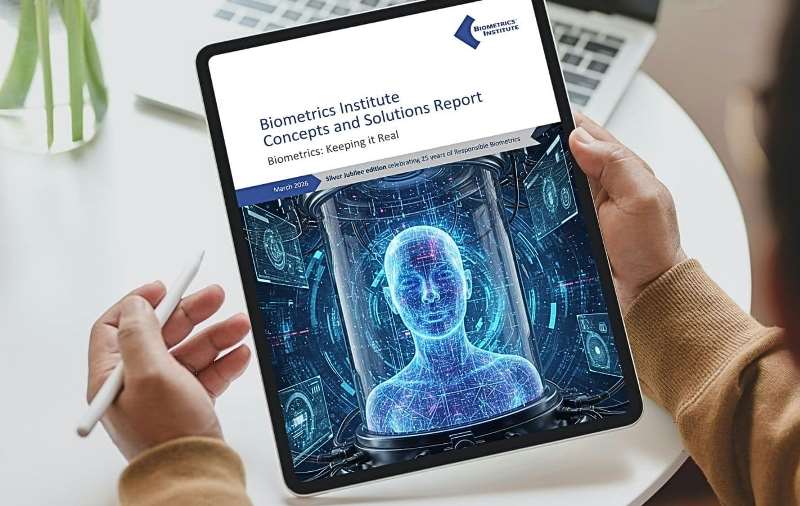
To celebrate 25 years of promoting the ethical and responsible use of biometrics, the Biometrics Institute has released its much-anticipated Silver Jubilee Concepts and Solutions Report – Biometrics: Keeping it Real
This special edition builds upon the theme of the Institute’s State of Biometrics Report by focusing on the necessity of “keeping it real” in an increasingly digital landscape. As biometrics become more integrated into our daily lives, the focus must remain on authenticity, transparency, and the human impact. Public trust is the cornerstone of any successful implementation and maintaining robust controls and clearly defined governance is essential to ensuring these systems serve the public interest responsibly.
The report serves as a roadmap for an era defined by the rapid rise of synthetic media and the complexities of digital identity. Featuring 31 perspectives from across the global biometrics community, it moves beyond theory to provide actionable concepts, real-world examples, and insights for the immediate future.
“As we celebrate our 25th anniversary, the challenge isn’t just about the technology, it’s about maintaining the integrity of the human bond in a digital world,” says Isabelle Moeller, Chief Executive of the Biometrics Institute. “Keeping it Real is more than a theme, it is a call to action for the industry to prioritise transparency and rigorous testing against emerging threats like deepfakes.”
Key themes from the 2026 report
This year’s contributors draw from the deep, collective knowledge of the Institute’s international membership. Their submissions go beyond the theoretical, offering practical insights and successful real-world implementations that tackle the complex ethical and technical challenges currently facing the industry. The report highlights several core areas of focus:
• Deepfakes and synthetic media: Addressing the question, “Is AI outsmarting us?” Submissions examine strategies for detection, the transition from visual inspection to “proof of personhood”, and the role of liveness detection to prevent fraud
• Border management and travel: Investigating whether seamless travel is becoming a reality through digital passports, Electronic Travel Authorisations (ETAs), and interoperable verifiable credentials, and the complexities of managing biometric consent across borders
• Remote identity and onboarding:Best practices for secure remote identity verification (IDV) and reusable identity to reduce user friction, while addressing vulnerabilities like injection attacks
• Ethics, governance, and inclusion:Navigating legislative impacts and the vital distinction between “verification” and “identification” and a focus on drivers for social inclusion, ensuring systems work for all populations
• Next-generation security:Practical applications of multimodal approaches, including voice, palm recognition and behavioural biometrics, to strengthen live facial recognition as tools for account security and preventing identity theft
Keeping it Real through The Three Laws of Biometrics
To ensure that innovation never outpaces accountability, the Biometrics Institute encourages industry stakeholders, policymakers, and the public to engage in the ongoing conversation about responsible biometrics and by utilising its extensive good practice guidance material. Keeping it real requires a foundation of integrity, which is why the Institute advocates for adherence to the Three Laws of Biometrics: Policy before Process before Technology.
This framework ensures that ethical considerations and robust policies are in place to guide the development and implementation of technologies, safeguarding individual rights and promoting public trust. By prioritising policy and process, organisations can ensure their biometric applications remain grounded in transparency while safeguarding individual rights and promoting public trust.
Above, image credited to the Biometrics Institute
